
🎧Listen now on Spotify
Campus Comms Unplugged
Our podcast, Campus Comms Unplugged, hosted by Toby Roe, explores the challenges and opportunities shaping the future of marketing and communications in business education. We aim to overcome barriers faced by marketing communications professionals in business schools and help them make a bigger impact with their campaigns.
Each month, we feature insights from leaders in the field. We cover topics such as strategy, messaging, artificial intelligence (AI), international student trends, and more.
Episode 7
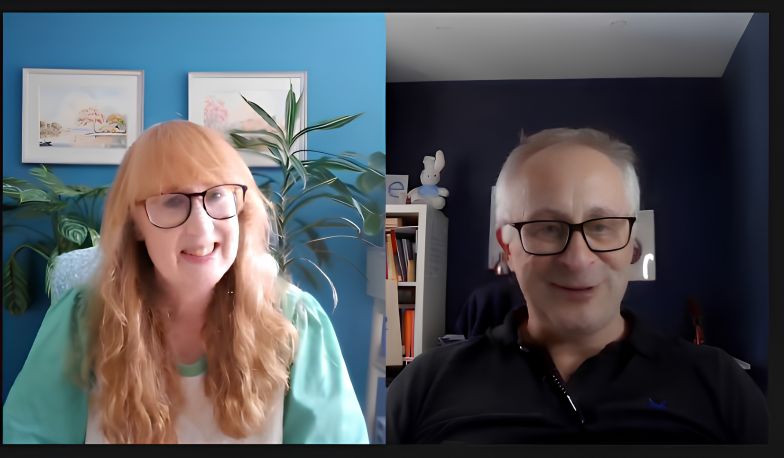
In our seventh episode, host Toby Roe sat down with executive coach, Anna Brown, to talk about the challenges and pressures faced by marketing communications teams working in the central function of business schools.
Anna Brown is the founder of Shoya Coaching. She also coaches executives at both Henley Business School and Warwick Business School. She works with leaders and senior executives across many industries, supporting them with their personal growth and career changes. Immersion in and drawing lessons from the natural world is a big focus of her coaching.
Anna and Toby discussed why marcomms roles in business education can feel especially stressful through competing demands and constant urgency creating pressure. They looked at practical and healthy ways to help manage anxiety and stress and the importance of investing in wellbeing.
Key takeaways
- A fixed long-term plan in this environment is often unrealistic. Flexibility and acceptance are essential. A strategic framework is possible, but unexpected issues will arise. There is a need to accept that plans are unfolding and shapeable to a degree.
- Stress is created when central teams are asked to do more with less, especially when their work is not directly revenue generating and therefore less visible. Normalising stress response is important. People need to understand that their reaction is understandable in a high-pressure environment. People shouldn’t assume that everyone else is coping better than them.
- Nature can support recovery. This can be done through walking, colour, rhythm, and the shift from detailed, left-brain focus into more expansive, strategic thinking.
- Practical things that individuals and leaders can do include:
- Reducing the to-do list to three priorities – three things for today, three for the week and three for the month, particularly when a to-do list feels never-ending. This will help link actions to progress, rather than obsessing over when everything will be finished.
- Getting outside more often – introduce walking meetings, walking in rain or shine, and using headphones for walking calls even when colleagues are in separate locations.
- Talking openly about wellbeing instead of treating busyness as a badge of honour. It’s important not to “collude” with default responses such as “I’m really busy,” and to ask more often about the space someone has allowed themselves.
In their words
“There’s something really important about wellbeing: it’s also about leaders creating the conditions for honest conversations. Teams need to be able to talk openly about the pressure they are under, rather than feeling they have to cope alone. Small actions can matter – such as a leader saying, ‘I went for a walk at lunchtime.’ That can give people permission to develop healthier habits without making wellbeing another mandate. Ultimately, it is about creating a culture where people encourage one another, and where looking after yourself is seen as part of doing good work.” – Anna Brown, Executive Coach.
If you want to stay connected with the latest conversations on marketing and communications in business education, subscribe to Campus Comms Unplugged or CLICK HERE to sign up for our newsletter!